The challenge
Fuel prices in Spain change several times a day, so an AI assistant can’t know them on its own: asked for the cheapest diesel nearby, it searches the web or guesses. TankoUp already had live prices for more than 12,000 stations behind its app.
What we did
- Built an MCP server in Python with the official MCP SDK, served over Streamable HTTP on Google Cloud Run. It reads the same API as the app, with its own key, so there is no second copy of the data.
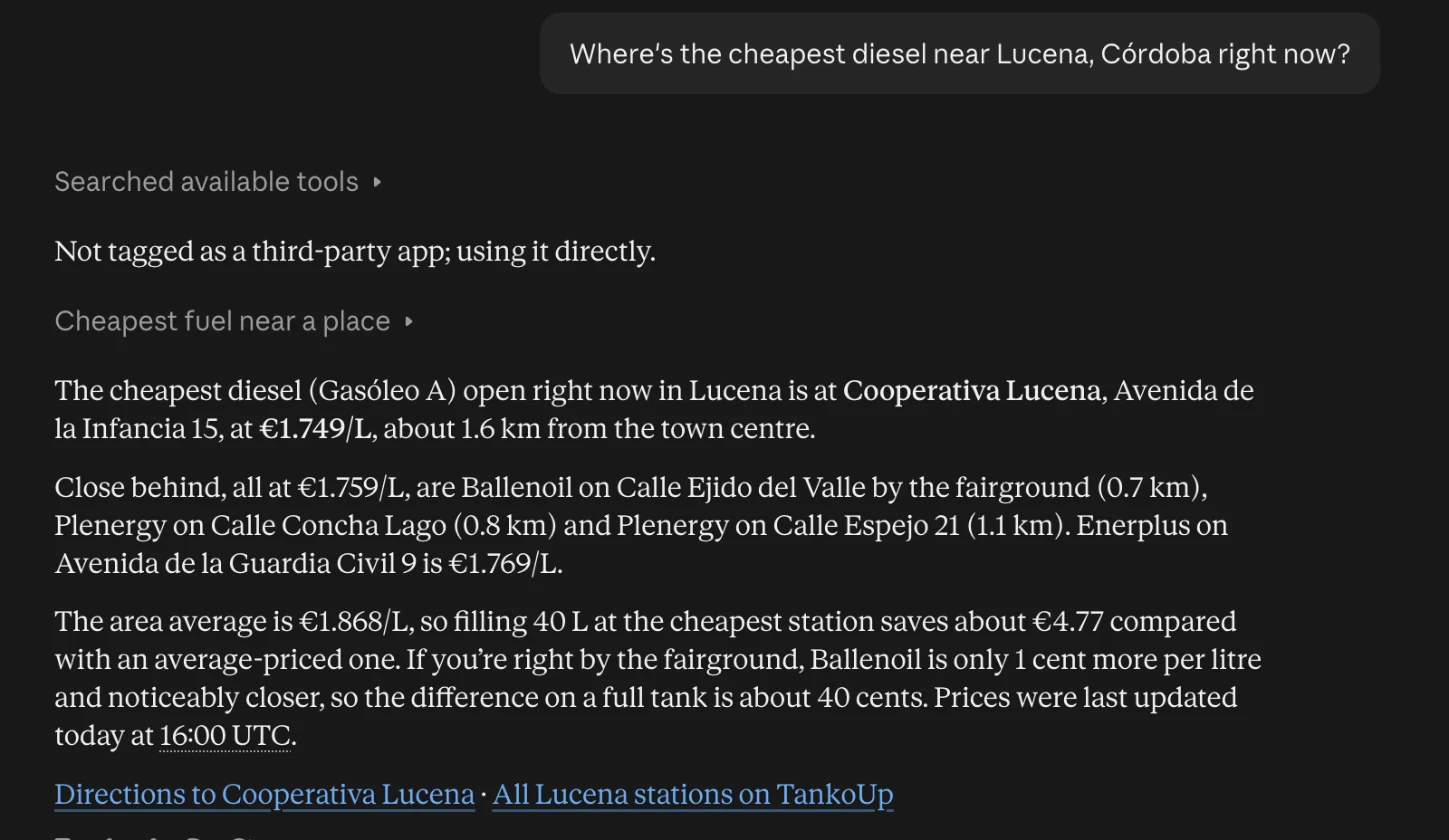
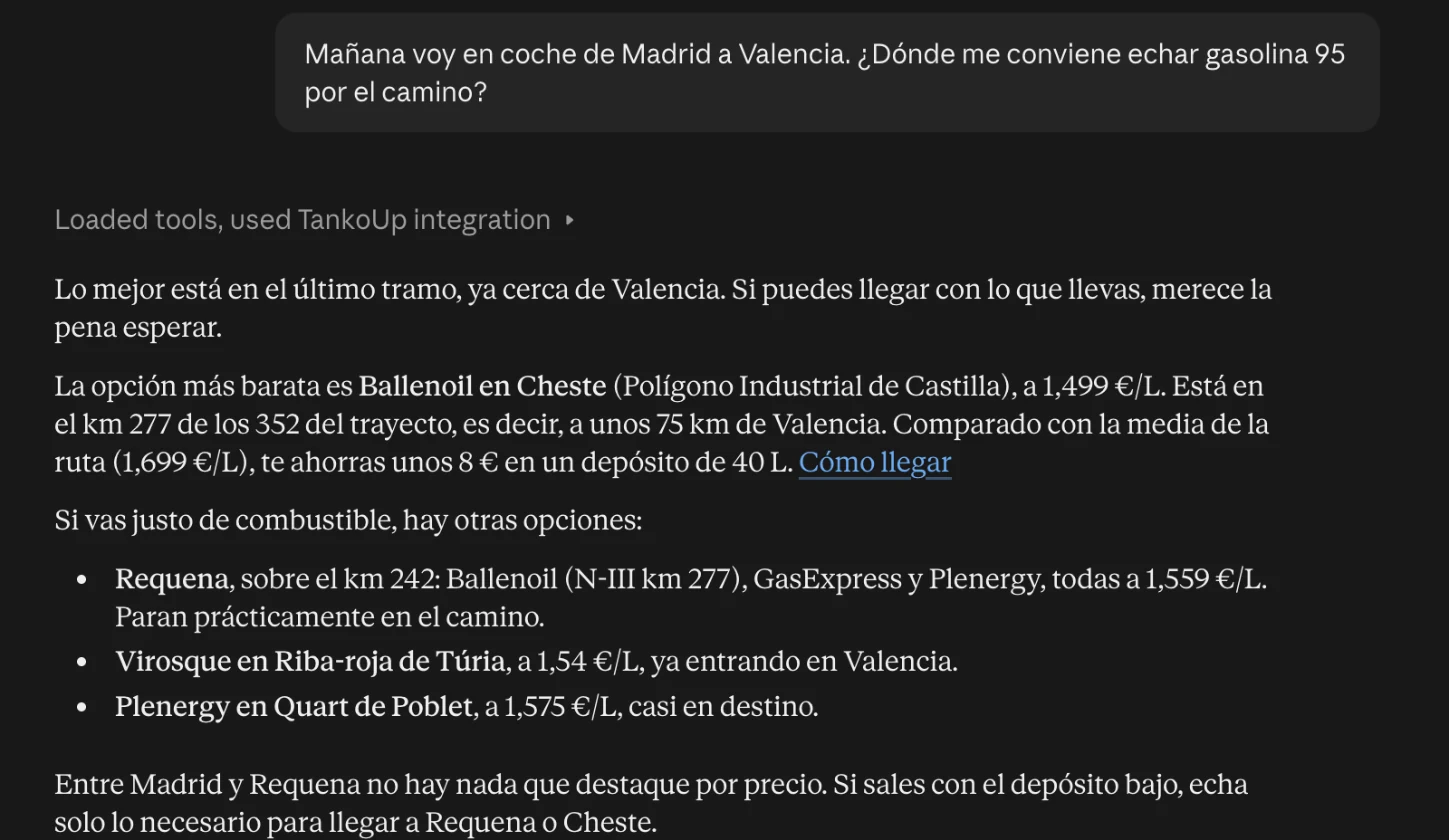
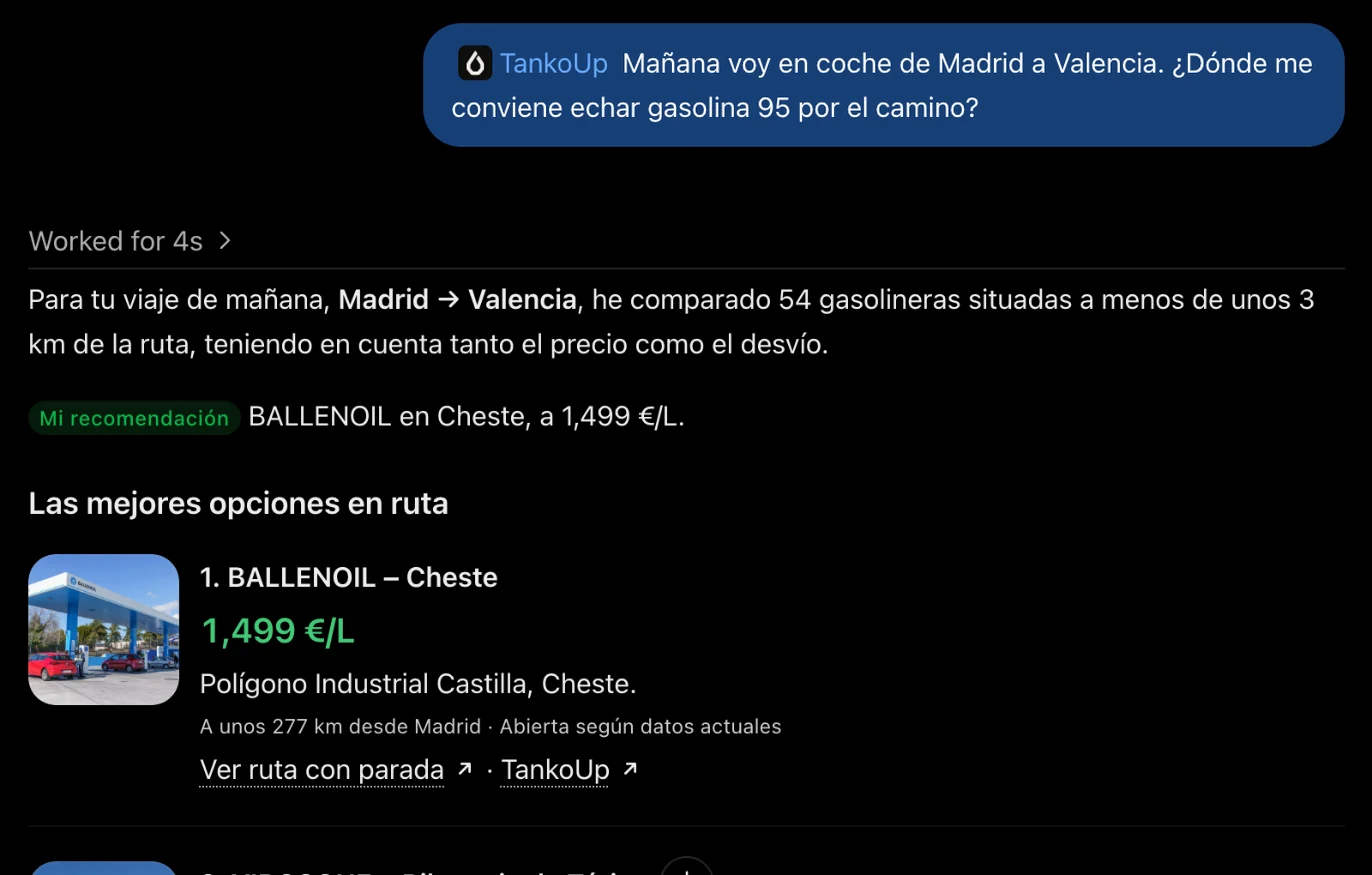
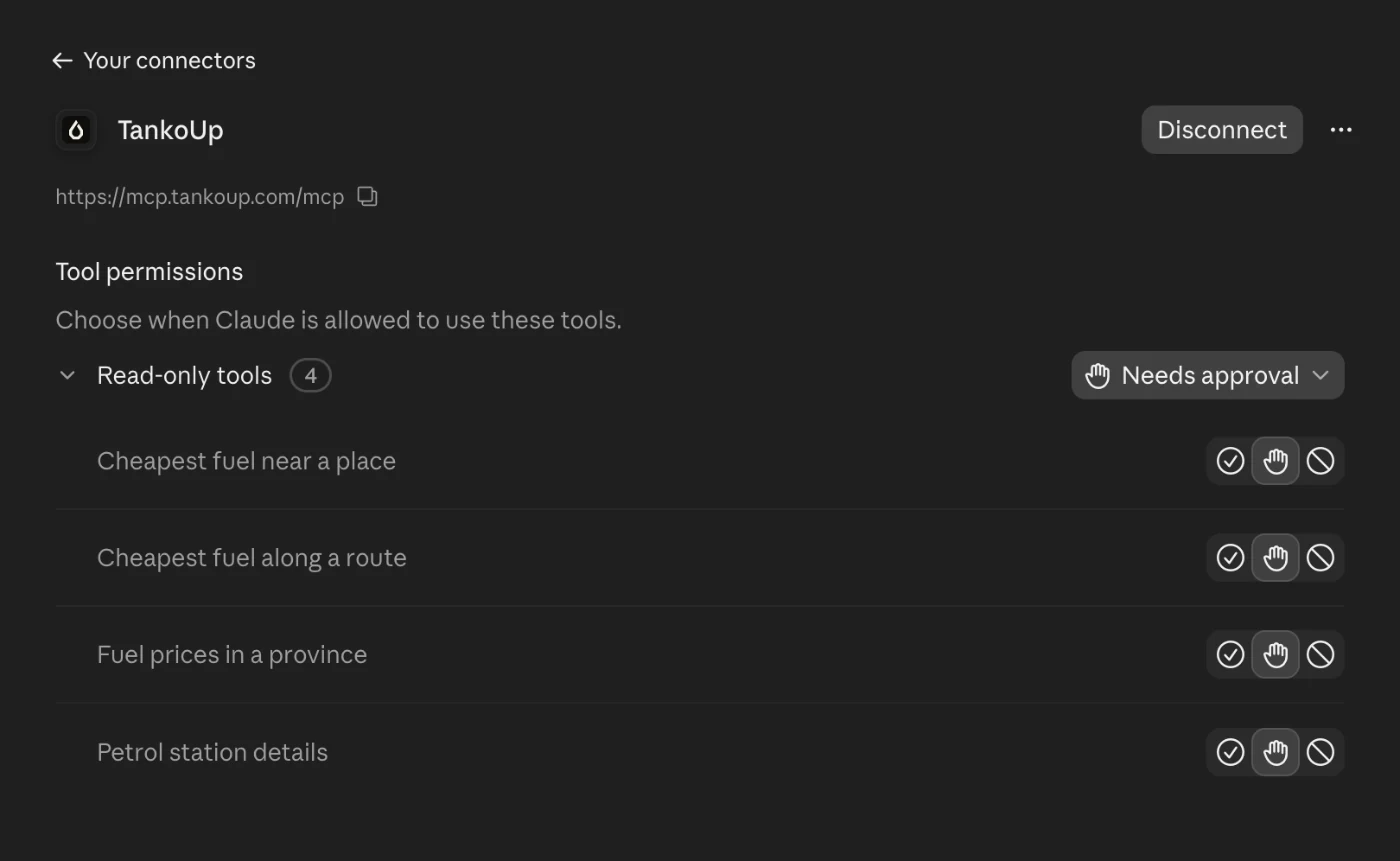
- Designed four read-only tools: cheapest fuel near a place, cheapest fuel along a route of up to 1,200 km, prices in a province and a station’s details. Answers are short, with a link to the station on TankoUp and directions in Google Maps.
- Ranked stations by total cost, as the app does: the price of 40 litres plus the fuel to get there and back, or to leave the route.
- Added a list of the 3,230 towns with a petrol station, so it understands accents, other languages and small typos without a third-party geocoder.
- Added rate limits per client and per day, and 53 automated tests. It never logs what people ask: only the tool, the protocol version and the response time.
- Tested it with real questions in Claude and ChatGPT. That exposed out-of-date prices in the province figures of TankoUp’s own API, which we fixed as well.
The result
Anyone can add TankoUp to Claude or ChatGPT with one URL and no sign-in. From a plain question, in English or Spanish, Claude picks the right tool on its own. The code is public on GitHub, the server is listed in the official MCP Registry, and it costs about $0.10 a month to run.
The same approach works for any product with an API: bookings, stock, order status or a catalogue, answered inside the assistant your customers already use.